KC-390 Emerges as a Modern Tactical Airlift Leader
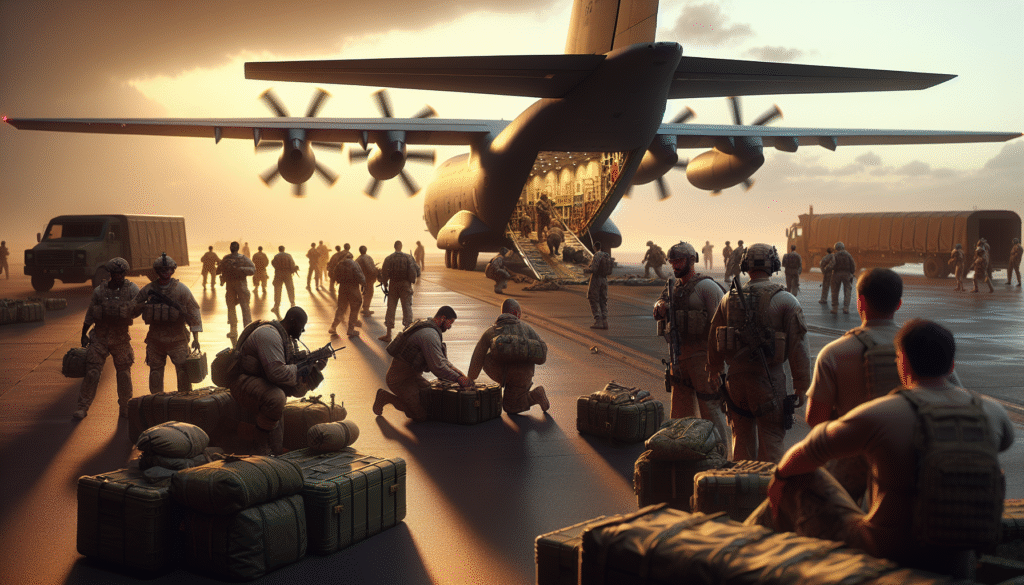
As global defense priorities continue to shift toward flexibility, rapid deployment, and cost-effectiveness, Embraer’s KC-390 Millennium is gaining prominence as a versatile and capable contender among tactical airlifters. In an article titled “KC-390’s Multi-Mission Capabilities Are A Force Multiplier,” published by Breaking Defense, the aircraft’s adaptability and operational efficiency are showcased as key factors contributing to its growing appeal on the international stage.
Designed as a multi-mission military transport, the KC-390 is positioned to meet a variety of defense and humanitarian requirements, ranging from cargo and troop transport to aerial refueling and medical evacuation. Its strategic versatility mirrors a broader trend among modern militaries that are seeking platforms capable of performing diverse operational roles with reduced logistical burdens and improved cost-efficiency.
Breaking Defense highlights the KC-390’s ability to deliver high operational availability and quick turnaround times, traits that are increasingly critical amid evolving threats and fluctuating global crisis response needs. With fly-by-wire controls, robust avionics suites, and a high degree of automation, the KC-390 offers not only advanced performance but also reductions in crew workload and maintenance complexity.
The aircraft’s appeal has translated into growing international interest. Countries such as Portugal and Hungary have already inked procurement deals, and its recent selection by the Netherlands for its air mobility needs further underscores its expanding footprint within NATO-aligned nations. As budget-conscious defense ministries across Europe evaluate options for fleet renewal and mission modernization, the KC-390’s interoperability with alliance standards becomes a notable asset.
Moreover, Embraer’s positioning of the KC-390 as a more cost-effective alternative to legacy platforms like the C-130 Hercules is resonating with nations facing rising defense procurement costs. While the C-130 continues to serve reliably, the KC-390 offers a modernized architecture built around current-generation operational requirements, including higher payload capacities, faster cruise speeds, and responsive maintenance practices.
In terms of strategic industrial partnerships, Embraer’s collaborative production model—particularly its agreements in Europe—stands out as a differentiator. Joint assembly and technology-sharing arrangements not only foster local industrial participation but also contribute to long-term lifecycle support, an element buyers consider crucial in procurement decisions.
As defense forces enhance their readiness posture for a wide array of missions—ranging from peacekeeping and disaster relief to high-intensity operations—the demand for platforms like the KC-390 is poised to rise. Embraer’s emphasis on multirole efficiency is well-aligned with the future trajectory of military airlift requirements, as militaries increasingly prize aircraft that can operate effectively across both peacetime and contingency scenarios.
The KC-390’s future, as described in Breaking Defense, appears to rest not merely on its engineering, but on its alignment with a new strategic calculus—one that rewards agility, coalition interoperability, and lifecycle economy. As global defense planners recalibrate for an era marked by resource constraints and strategic unpredictability, Embraer’s Millennium may offer an appropriately modern solution.