Germany Pushes Two-Speed EU for Defense Overhaul
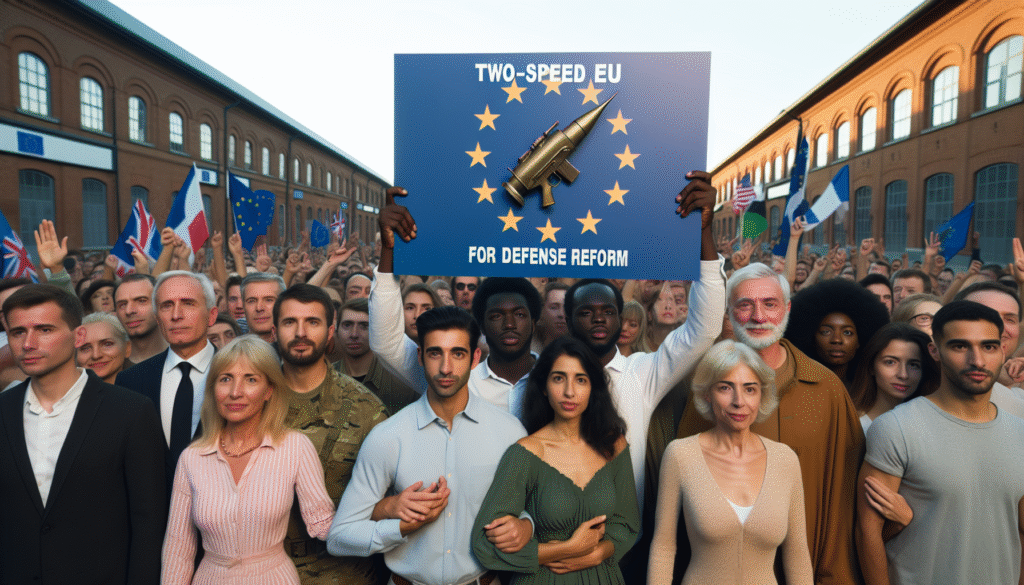
Germany has proposed a significant restructuring of European defense cooperation by advancing the idea of a “two-speed” European Union, a move aimed at accelerating collective military buildup in response to growing global threats. The proposal, first reported by Defense News in its article titled “Germany proposes ‘two-speed’ EU to hasten defense buildup,” underscores Berlin’s desire to lead a core group of willing member states toward deeper defense integration without requiring unanimous agreement from all EU countries.
German Defense Minister Boris Pistorius presented the plan during a high-profile security conference in Berlin, emphasizing the urgent need for Europe to bolster its military capabilities amid escalating geopolitical tensions, particularly Russia’s ongoing aggression in Ukraine. The initiative seeks to create a framework within the EU that allows a coalition of member states to progress more rapidly on defense procurement, production, and strategy—while those less inclined or able to act swiftly may join at a later stage.
The concept of differentiated integration, often referred to as a “two-speed” Europe, is not entirely new within EU policy discussions but has gained fresh momentum as member states confront the limitations of achieving unanimity on sensitive defense matters. Pistorius framed the initiative as both a practical necessity and a strategic imperative, arguing that inaction or delay could leave the continent strategically vulnerable in an increasingly volatile global landscape.
Central to the German proposal is the idea of pooling military procurement and industrial capabilities to enhance the effectiveness and efficiency of European defense spending. Berlin argues that fragmented defense markets and a lack of standardization across EU members have historically undermined Europe’s ability to act autonomously. By allowing willing partners to move forward collectively, Germany hopes to create a defense industrial base capable of producing the equipment and technology required for a credible European deterrence posture.
While the proposal has elicited cautious interest from several EU partners, it also raises concerns about dividing the bloc and creating tiers of membership. Critics warn that such a structure could widen existing political fault lines within the union, particularly among states wary of sacrificing aspects of national sovereignty or fearful of being sidelined in collective decision-making.
Nevertheless, the proposal aligns with growing pressure from NATO and international allies for Europe to shoulder a greater share of its own defense burden. As the United States recalibrates its global commitments and Russia’s war in Ukraine continues to reshape European security priorities, momentum for a more self-reliant European defense strategy has increased markedly.
EU officials have expressed interest in exploring options for flexible integration mechanisms, acknowledging that the bloc’s current consensus-based model often serves as a barrier to rapid decision-making in the defense realm. In this context, Germany’s suggestion represents a bold attempt to resolve a longstanding challenge while preserving the political framework of EU cooperation.
As discussions unfold, Berlin is expected to work closely with France and other key partners to refine the proposal and build a coalition of support. Observers note that its success will depend not only on political will but also on the ability to articulate clear legal, operational, and financial pathways for a two-speed defense initiative.
In proposing this new direction, Germany has positioned itself at the forefront of an urgent debate about the future of European security. Whether the EU can reconcile unity with flexibility remains an open question—but the pressures shaping its defense policy are no longer theoretical.