Army Expands Space Operations Roles to Enlisted Troops
The U.S. Army has officially begun accepting applications for enlisted soldiers seeking to transition into space operations roles, marking a significant step in broadening the military’s capabilities in an increasingly contested and strategically vital domain. The move, first reported in the article “Army opens applications for enlisted space operations roles” by Military Times, signals the service’s continued investment in space as a critical component of future warfare and national security.
Enlisted personnel from the ranks of privates first class to sergeants first class are now eligible to apply for the newly accessible 17S space operations military occupational specialty (MOS). Previously, this career field was limited to officer billets. The Army’s decision to open the door to enlisted soldiers reflects a broadened vision for integrating space operations across multiple levels of the force.
Applicants selected for the program will be required to complete a rigorous training pathway, including an initial recommendation from their chain of command, eligibility screening, and eventual attendance at the Space Operators Qualification Course. In addition, selected soldiers must meet Top Secret/Sensitive Compartmented Information (TS/SCI) clearance requirements and are expected to demonstrate aptitude in science, technology, engineering, or mathematics-related disciplines—an indicator of the technical demands inherent in space operations missions.
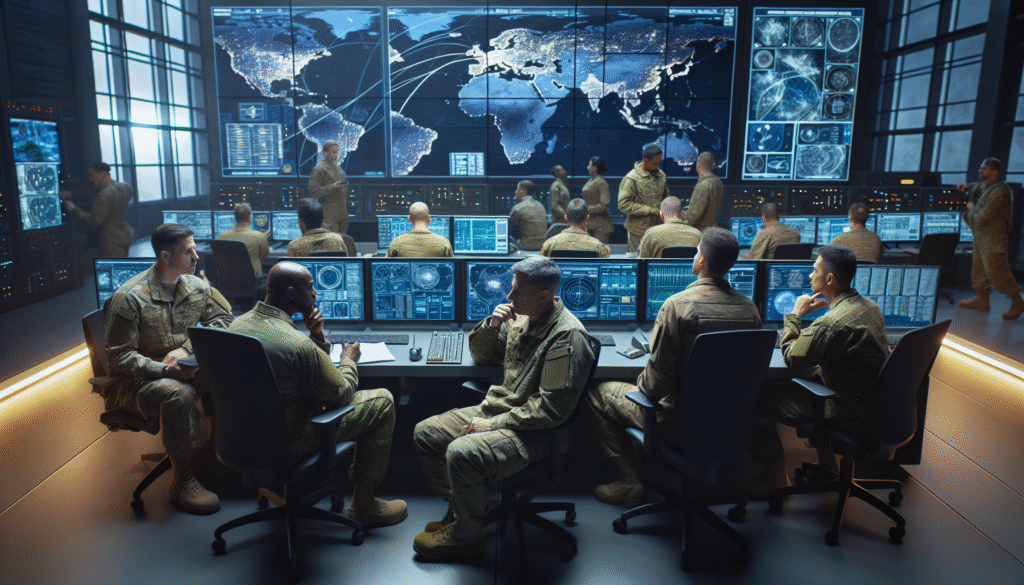
The expansion of the 17S MOS aligns with the Army’s role in supporting and complementing the U.S. Space Force, the military’s newest branch dedicated to securing American interests in orbit. Army space operators are currently embedded in various joint and Army-specific units, providing support in areas such as satellite communications, missile warning systems, and space-based intelligence. By opening this career path to enlisted service members, the Army aims to tap into a larger talent pool and improve operational readiness in space.
Lt. Col. Matthew Lintker, commander of the 1st Space Battalion, told Military Times that “bringing enlisted soldiers into this field will diversify and broaden the Army’s space force, allowing for a deeper bench of experienced professionals.” He emphasized that the initiative reflects both operational necessity and a growing recognition that space is no longer a benign environment, but rather one where strategic competition is underway.
This development comes amid heightened global concern over the militarization of space, with near-peer adversaries advancing satellite-interference capabilities and developing counter-space weapons. As satellites and space-based systems become increasingly vital for communications, navigation, and intelligence, the Army’s move to expand its human capital in this arena indicates a commitment to securing U.S. dominance in the extraterrestrial sphere.
Applications for the initial round of enlisted space operations roles will remain open through the end of February, with the Army planning to assess and select candidates before sending them through specialized training later this year.
As military operations grow ever more reliant on space-based assets, the integration of enlisted personnel into the Army’s space workforce represents a forward-looking adaptation—one that underscores the evolving nature of defense priorities in the 21st century.