Germany Launches Drone Production for Ukraine
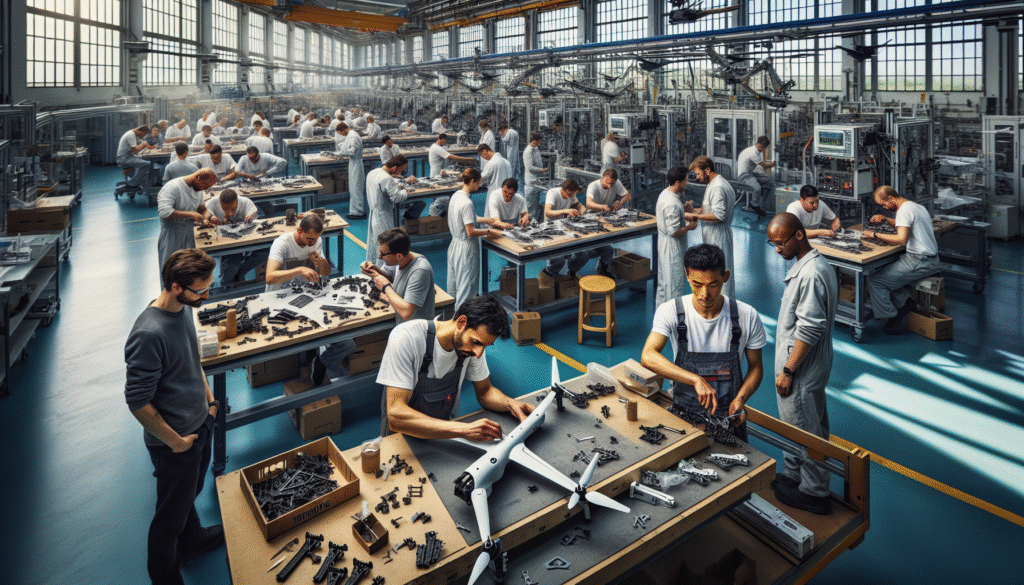
Germany is set to establish a production line for small drones to support Ukrainian military forces, according to a report published by Defense News on January 2, 2026, titled “Germany to host small drones production line for Ukrainian forces.” The initiative, a direct collaboration between a German manufacturer and Ukrainian representatives, marks a significant step in Berlin’s evolving role in providing logistical and tactical aid to Kyiv amid its ongoing conflict with Russia.
This strategic move involves the assembly of reconnaissance and potentially light combat drones within German borders, intended for immediate delivery to Ukrainian forces. The production line will be operated by Quantum-Systems, a Bavaria-based drone company considered a key player in European unmanned aerial systems. The facility will produce the Vector drone, designed for intelligence, surveillance, and reconnaissance missions, and valued for its compact design and portability.
Quantum-Systems has previously supplied similar drones to Ukrainian forces directly, but the decision to shift production and assembly to a larger scale within Germany is a notable expansion. The company claims the new manufacturing line will significantly accelerate the delivery timetable while enhancing operational reliability through proximity to key logistical and defense infrastructure.
The move has garnered attention in the context of Germany’s broader pivot in defense policy. After longstanding hesitancy to deliver offensive weapons to conflict zones, Berlin has in recent years become one of Ukraine’s principal suppliers of military aid, including air defense systems, armored vehicles, and artillery. Establishing domestic production of drones earmarked for an active warzone signals another layer of commitment to Ukraine while also navigating complex political pressures at home and within the European Union.
Though government officials have yet to publicly comment in detail on the arrangement, the Defense News report highlights the growing cooperation between private defense contractors and national policy, especially in response to rapidly shifting security concerns on the continent. German lawmakers have so far largely backed increased military support for Ukraine, though dissent remains in some quarters regarding the long-term strategic risks of escalating arms transfers.
The announcement also comes at a time when Ukraine is intensifying its use of drone technology as a cost-effective means to counteract Russia’s numerical and technological superiority. Ukrainian forces have deployed thousands of drones in both offensive and reconnaissance roles along the front lines and in attacks behind enemy lines. The steady supply of Western-made systems, particularly those that integrate advanced sensors and automated flight capabilities, is seen as a key factor in maintaining operational momentum.
By hosting production rather than simply exporting finished units, Germany is positioning itself as a key logistical and technological partner in Ukraine’s defense architecture. The implications reach beyond the battlefield, potentially setting a precedent for similar arrangements in future armed conflicts where drone warfare and decentralized production play defining roles.
As the conflict in Ukraine drags into another year, Western nations continue to seek ways to support Kyiv without direct military involvement. Germany’s decision to facilitate the manufacture of battlefield technology on its soil underscores the increasing importance of industrial policy in meeting Europe’s security challenges.