10th Mountain Division Launches New Drone Attack Unit
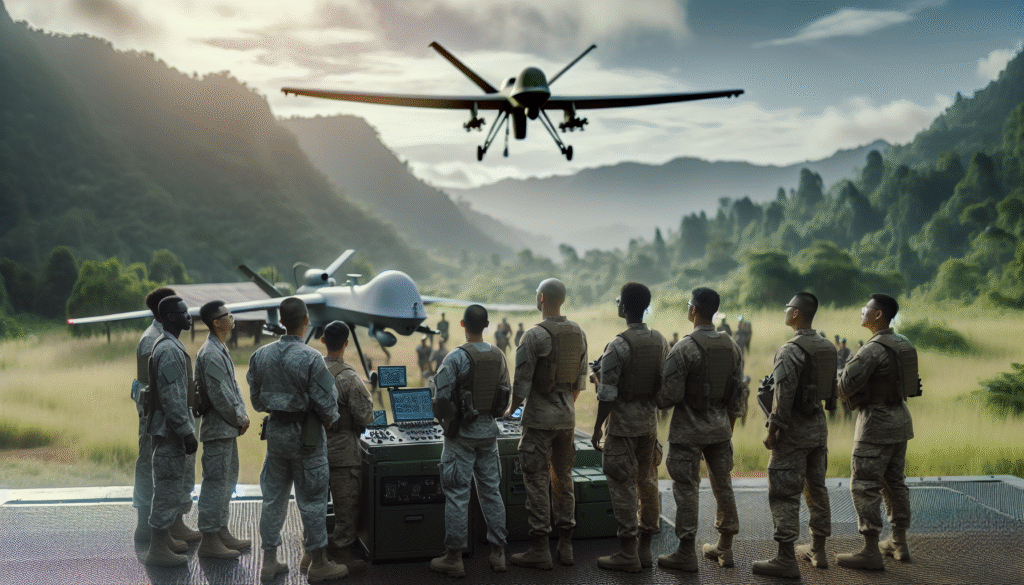
The U.S. Army’s 10th Mountain Division has activated a new specialized drone attack unit, signaling a significant modernization of its tactical capabilities as unmanned aerial systems become increasingly integral to contemporary combat operations. According to the Military Times article titled “US Army’s 10th Mountain Division stands up new drone attack unit,” the unit is designed to enhance the Army’s agility in responding to evolving battlefield threats by integrating more autonomous and semi-autonomous systems into its force structure.
Based at Fort Drum, New York, the new drone attack unit marks the Army’s latest step toward operationalizing small, agile formations capable of operating in dispersed, high-threat environments. The unit’s formation reflects a broader shift within the military toward incorporating lower-cost, rapidly deployable drone technologies to complement traditional ground forces. These drones are expected to execute a variety of roles, including reconnaissance, electronic warfare, and kinetic strikes.
Military officials emphasized that the drone unit is not merely an experimental concept but a combat-ready element intended to influence how future brigade combat teams organize and fight. While details about the unit’s exact size and composition remain classified, leaders noted that the new element is composed of both enlisted personnel and officers recently trained in advanced unmanned systems and electronic support operations.
Commanders within the 10th Mountain Division described the initiative as a testing ground for new tactics that could be scaled across the Army. The drone unit is employing commercial-off-the-shelf systems modified with military-grade enhancements—a strategy that allows rapid fielding while keeping costs relatively low. This model also enables soldiers to provide real-time feedback on system performance and battlefield utility, accelerating the Army’s acquisition and adaptation cycle.
The move comes amid strategic imperatives to counter similar advances by potential adversaries. In recent conflicts, including those in Ukraine and the Middle East, small drone swarms and individually operated aerial systems have demonstrated the ability to inflict significant damage at low cost and with minimal logistical footprints. The U.S. Army’s investment in such capabilities reflects a recognition that air superiority no longer depends solely on large, crewed aircraft but increasingly involves localized airspace denial and persistent surveillance from unmanned platforms.
Furthermore, the drone unit aligns with the Pentagon’s broader Replicator initiative, a program designed to mass-produce autonomous systems to outpace rivals in future conflicts. The synergies between Replicator and initiatives like the 10th Mountain Division’s new unit could become key components of the U.S. military’s emerging doctrine of distributed warfare—moving away from heavily concentrated formations toward more adaptable, network-centric operations.
While the drone unit remains in its early stages, Army leaders suggest its success will be measured not solely by technological performance but by the extent to which it changes how battlefield decisions are made and acted upon. If effective, such units could also open new paths for integrating artificial intelligence, machine learning, and cyber capabilities into traditional military functions.
The 10th Mountain Division, long known for its combat toughness in austere environments, may now be at the forefront of reshaping the Army’s tactical approach in the drone era—where speed, adaptability, and decentralized lethality are paramount. As the drone attack unit gains experience and visibility across the force, its lessons are likely to inform not just future acquisitions, but the very nature of ground warfare in the 21st century.