Pentagon Prepares Strategic Shift for 2026 Defense Plan
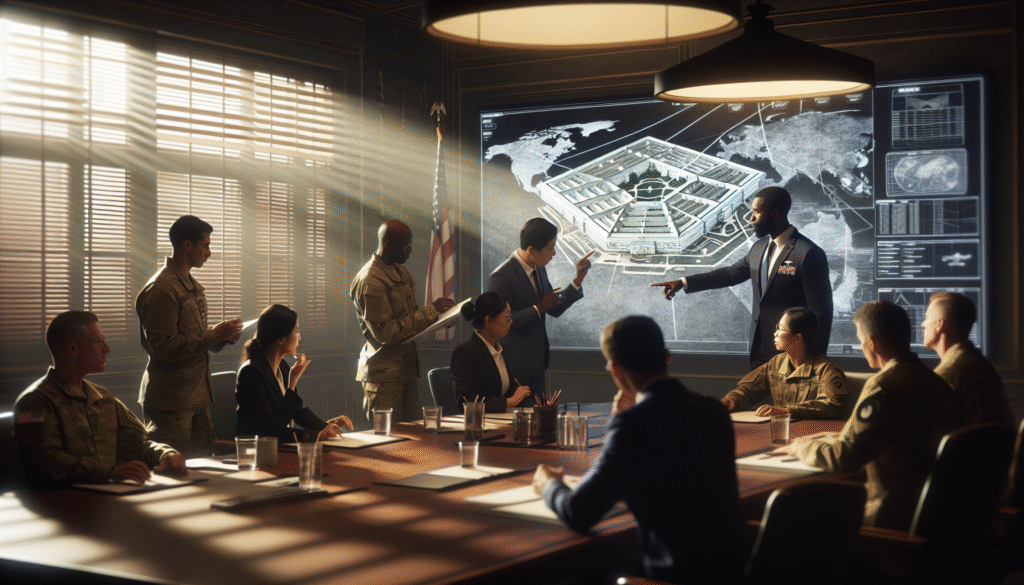
As the Department of Defense prepares to unveil its updated posture for the coming year, a recent preview by Breaking Defense titled “From National Defense Strategy Plans To Acquisition Overhaul: Findings 2026 Preview” offers an early look into the strategic shifts that could define U.S. military planning in 2026. The piece outlines several critical developments expected to shape the Pentagon’s priorities, including an intensified focus on deterring China, accelerating acquisition reforms, and bolstering joint force integration.
According to the report, the forthcoming 2026 National Defense Strategy (NDS) will place even greater emphasis on competition with China across the Indo-Pacific, marking a continuation—and likely expansion—of priorities established in the 2022 NDS. Defense officials are reportedly looking to refine deterrence concepts tailored to a potential Taiwan contingency, with a sharpened focus on resilience, mobility, and rapid interoperability among U.S. forces and regional allies.
The strategic preview suggests that updated investment guidance may soon steer funding away from legacy platforms in favor of advanced capabilities better suited for contested environments. These include hypersonic weapons, autonomous systems, and artificial intelligence-driven technologies. The desire to modernize comes amid bipartisan pressure in Congress to ensure the United States retains a military edge over peer competitors.
A prominent theme in the Breaking Defense article is the Department’s commitment to overhauling the acquisition system. Senior leaders are said to be examining structural reforms aimed at reducing bureaucratic inertia and accelerating the transition of emerging technologies from prototype to fielded system. While past efforts have struggled to achieve sustained results, officials appear intent on making meaningful progress in the coming year, particularly through new pilot programs and legislative engagement.
At the organizational level, enhanced collaboration among the services is expected to feature prominently. The findings preview outlines a growing momentum behind Joint All-Domain Command and Control (JADC2) efforts, as well as expanded experimentation under the auspices of service-level innovation commands like the Army Futures Command and the Air Force’s AFWERX. Greater synchronization during wargames and operational testing is being encouraged as the services aim to break traditional stovepipes in favor of a more integrated force construct.
Challenges remain, however. The article points to concerns over budget instability and the constrained fiscal environment that could imperil key modernization efforts. Analysts warn that emerging threats abroad, including increased aggressiveness by both China and Russia, may require more urgent and coherent action than previous cycles of strategic planning have delivered.
As the Pentagon finalizes its 2026 strategy and budget documents over the coming months, observers will be watching closely for how these anticipated priorities are translated into specific programs and resource allocations. The choices made now, as the Breaking Defense preview underscores, will shape the future of American military power for years to come.