Soldier Feels Again with Neural-Enabled Prosthetic Arm
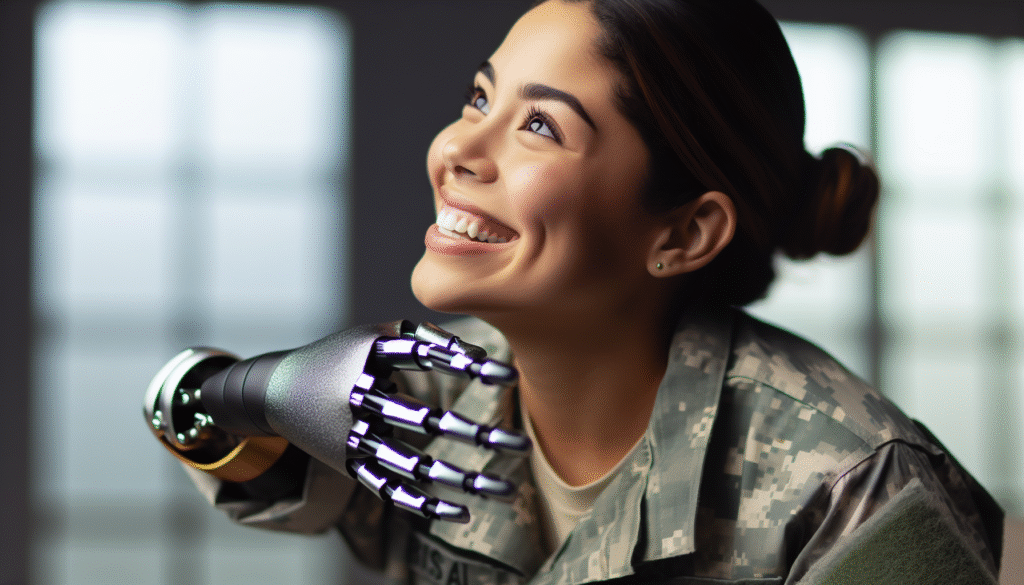
In a landmark advancement blending neuroscience and prosthetics, a U.S. Army soldier has regained a functional sense of touch through a groundbreaking neural-enabled prosthetic limb, as originally detailed in the article “Soldier regains sense of touch through neural-enabled prosthetic limb” published by Military Times.
The advancement marks a significant step toward restoring near-natural sensation in amputees, particularly among service members who have suffered traumatic limb loss. According to the Military Times report, the unnamed soldier participated in clinical trials of an experimental prosthesis developed through a collaboration between the Department of Defense and leading biomedical researchers. The initiative aims to improve not only mobility but also sensory feedback, a frontier long sought in prosthetic science.
The key innovation lies in the integration of neural interface technology, which connects the robotic limb to the peripheral nervous system. By implanting electrodes near the residual nerves and feeding bi-directional signals between the brain and the prosthesis, the system allows users to perceive information such as pressure, texture, and grip strength with notable precision. This represents a vast improvement over conventional prostheses, which typically offer limited, if any, sensory input.
The soldier reported the ability to discern subtle sensations—such as the firmness of a handshake or the feel of a smooth surface—enhancing both functional capability and psychological well-being. This integration of tactile perception is being hailed by medical professionals as a major leap forward in treating limb loss as not just a physical disability, but also a sensory and cognitive challenge.
Defense officials and researchers are optimistic about scaling the technology for broader use across the military and civilian sectors. While still in early stages of deployment, the implications of neural-enabled prosthetics are profound. They could redefine rehabilitation paradigms and substantially improve quality of life for an estimated 1,600 military amputees from post-9/11 conflicts alone, as well as hundreds of thousands of civilians living with limb loss in the United States.
Beyond tactile restoration, such devices may eventually allow for real-time feedback in high-stakes environments, potentially enabling soldiers to interact with tools or perform delicate tasks with greater dexterity and confidence. Researchers caution, however, that challenges including cost, long-term durability, and individualized calibration must still be addressed before widespread adoption.
As this technology evolves, the successful outcome reported by Military Times offers a compelling glimpse into what may soon become standard practice in prosthetic care—one where sensation and self-reliance go hand in hand in restoring not only physical capabilities but a vital sense of human connection.