Navy to Build Powerful Trump-Class Battleships by 2026
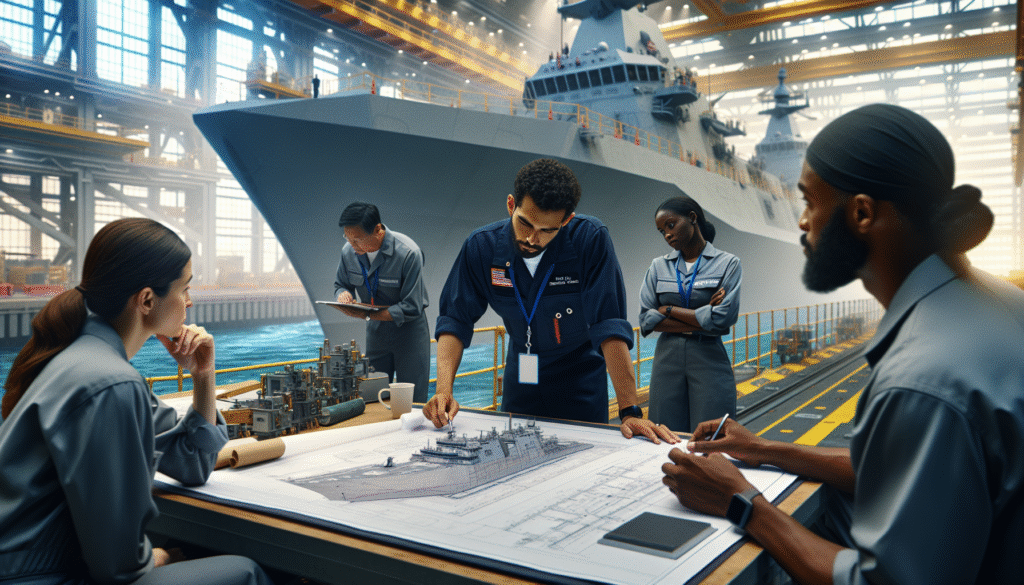
In a bold move that has sparked both anticipation and controversy, the U.S. Navy will begin construction of two Trump-class battleships in 2026, according to a report titled “Navy to Begin Constructing 2 Trump-class Battleships” published by Military Times. The ships, envisioned as a cornerstone of next-generation maritime warfare, represent a significant departure from recent naval strategy, reintroducing heavily armored and armed warships that some defense analysts regard as a Cold War relic.
The Trump-class vessels are slated to be the most heavily armed surface combatants the Navy has commissioned in decades. Each ship will reportedly displace over 80,000 tons and be outfitted with an array of advanced weapons systems, including hypersonic missile batteries, electromagnetic railguns, and next-generation electronic warfare capabilities. The class is being named after former President Donald Trump, a decision that has drawn political scrutiny and public debate.
The Navy submitted a classified request for funding in late 2024, following prolonged inter-service discussions and involvement from Congress. The Trump-class program received initial approval in a defense appropriations package passed earlier this month. Despite controversy over the ships’ cost—estimated at more than $30 billion for both vessels—military leaders have defended the decision, arguing that the ships will serve as flagships for carrier strike groups and act as deterrents in contested regions such as the South China Sea and North Atlantic.
Senior naval officials assert that battleships, once thought obsolete in the age of carrier and submarine dominance, can still fulfill a strategic role in modern warfare through technological superiority and sustained firepower. “This is a reimagining, not a revival,” said a Navy spokesperson speaking on background. “We are not returning to World War II tactics—we are integrating heavy surface firepower with 21st-century sensor networks and battlefield awareness.”
Critics, however, question the strategic necessity and cost-effectiveness of the Trump-class program. They argue that recent global conflicts have demonstrated the growing threat posed by drones, cyberattacks, and autonomous systems, rather than traditional surface vessels. Some lawmakers have vowed to seek further oversight and demand more detailed accounting from the Department of Defense before construction begins.
Nonetheless, early construction efforts are scheduled to begin at Huntington Ingalls Industries in Mississippi and General Dynamics’ Bath Iron Works in Maine. The program’s timeline anticipates sea trials beginning in the early 2030s. Navy officials emphasize that domestic shipbuilding capabilities will be a key component of the program, potentially creating thousands of skilled labor jobs over the next decade.
As geopolitical tensions rise and global naval powers rethink their force structures, the Trump-class battleships represent a dramatic—if divisive—reinvestment in conventional surface warfare. Whether these vessels will define the future of naval combat or become symbols of misaligned priorities remains to be seen.