US Renews Anti-ISIS Campaign in Syria with SDF Support
The United States has initiated a new military campaign targeting remnants of the Islamic State in Syria, underscoring the Pentagon’s continued focus on counterterrorism operations in the Middle East as instability in the region endures. According to the article “US launches operation to eliminate ISIS fighters in Syria” published by Military Times on December 19, 2025, the effort represents a renewed push to dismantle lingering ISIS networks that have maintained influence in rural and urban enclaves within eastern and northeastern Syria.
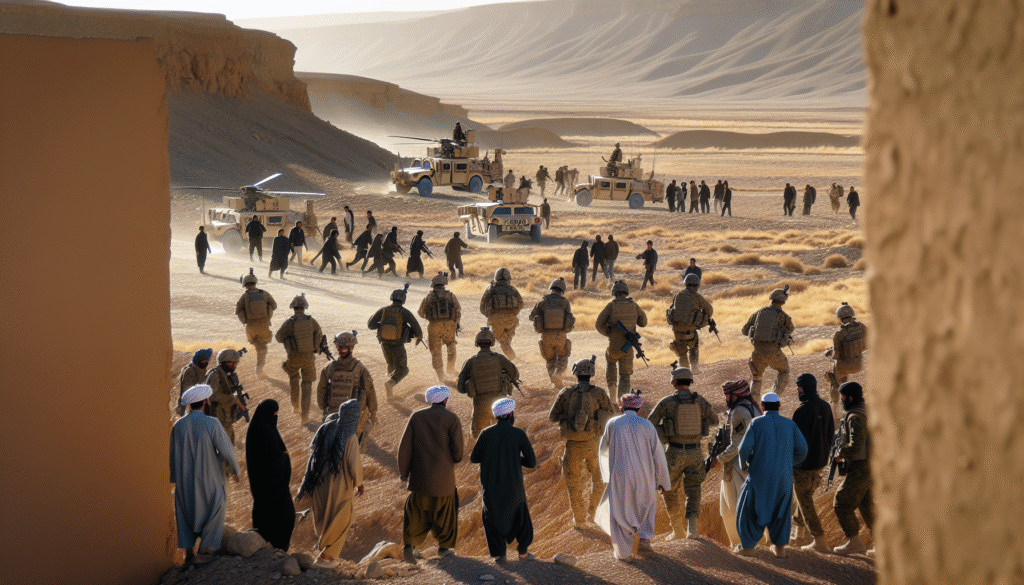
The operation, now underway with U.S. and partnered Syrian Democratic Forces (SDF), aims to disrupt the movement, financing, and command-and-control structures of ISIS cells that have increasingly turned to guerrilla-style tactics. While ISIS no longer holds territory as it once did during its height in 2014–2017, military officials warn that the group remains a threat, capable of orchestrating deadly attacks and undermining regional stability.
Military Times reported that U.S. forces have ramped up intelligence operations to identify senior ISIS figures and weapons caches hidden across Syria’s Deir ez-Zor province and other strategic areas. The operation involves precision drone strikes, night raids, and enhanced surveillance measures, all conducted in coordination with local Kurdish-led forces.
The offensive arrives against a backdrop of growing security concerns in Syria, where a web of regional actors, including Iranian-backed militias and residual extremist factions, complicates American missions. Defense officials cited by Military Times emphasized that the resurgence of ISIS activity—particularly in detention centers and displacement camps where thousands of former fighters and their families remain—necessitates a sustained military presence and active engagement.
Although the Biden administration had signaled intentions in past years to scale down overseas deployments, persistent ISIS threats have led to a reevaluation of troop levels and strategic posture in areas where U.S. influence is deemed vital. Senior military advisors maintain that without continued pressure, ISIS could regenerate its operational capability and reassert itself as a destabilizing force across the Levant.
Public communication around the operation remains measured. While some lawmakers have questioned the long-term efficacy of open-ended counterterrorism campaigns, Pentagon leaders have defended the initiative as a necessary step to protect U.S. national security and uphold commitments to allied forces still battling extremism on the ground.
Beyond tactical goals, the operation serves as a message to both allies and adversaries that the United States is willing to act decisively in environments where terrorist threats persist. As U.S. commanders continue to assess the evolving situation, they remain cautious but resolute in their aim of preventing a resurgence of ISIS’s global terror network.