Navy Launches Suicide Drone from Warship at Sea
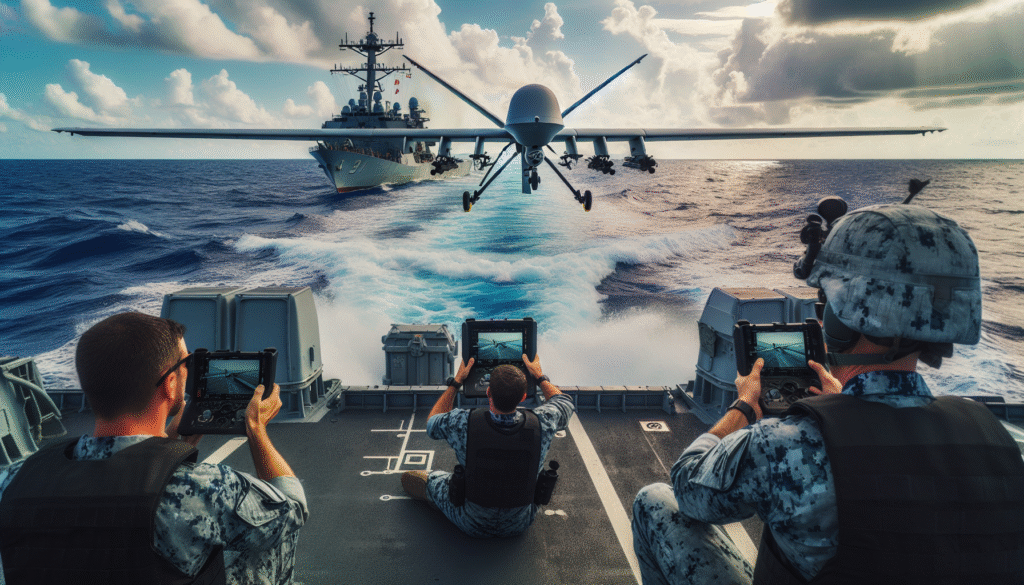
In a significant step toward integrating autonomous weapons into naval warfare, the U.S. Navy has successfully launched a suicide drone from a warship at sea for the first time, marking a new era in maritime strike capabilities. According to the article “Navy launches suicide drone from ship at sea for first time” published by Military Times, the test was conducted on October 25, 2024, when the amphibious transport dock USS Anchorage deployed a loitering munition known as the Altius-600M.
The Altius-600M represents a class of weapons often referred to as suicide drones or one-way attack drones. Unlike traditional unmanned aerial vehicles (UAVs) used for surveillance or reconnaissance, these systems are designed to loiter over an area and strike targets with lethal precision. Capable of flying over 200 nautical miles, the drone combines onboard sensors and GPS navigation to strike land or sea-based targets without direct human control once launched.
Developed by defense contractor Anduril Industries, the missile-sized drone has been undergoing integration testing as part of the Navy’s broader push to enhance lethality and situational awareness through unmanned technologies. Navy officials stated that this particular test demonstrates progress under the Tactical Resupply Unmanned Aircraft System program and falls under the strategic umbrella of DISTRIBUTED MARITIME OPERATIONS—a concept intended to enable naval forces to operate in a more dispersed, agile manner across contested environments.
Vice Adm. Kevin E. Lunday, commander of Naval Surface Forces, noted that the initiative is part of a broader shift toward rapid capability fielding. “This is a significant step forward in giving sailors advanced tools to meet emerging threats,” he said. “Deploying loitering munitions from our ships adds a valuable layer of tactical flexibility to our operational commanders.”
The deployment comes amid growing global interest in loitering munitions, particularly after their prominent use in recent conflicts, including in Ukraine and the South Caucasus. These weapons have demonstrated how small, relatively inexpensive systems can have outsized effects on high-value platforms such as tanks, command posts, and even air defense systems.
While the Navy has previously tested drone launches from land and shore-based platforms, this marks the first time such a system has been successfully deployed from a naval surface vessel at sea. The test also suggests that loitering munitions could soon become a standard component of naval arsenals, potentially even on a wide variety of platforms beyond large combatants.
Analysts note this development also signals a growing trend in U.S. military doctrine toward manned-unmanned teaming, where autonomous systems augment or extend human decision-making on the battlefield. Integrating loitering munitions into Navy vessel operations could offset gaps in firepower, reduce risk to manned platforms, and increase the tempo and flexibility of naval engagements.
However, the increasing use of autonomous and semi-autonomous systems in warfare also poses complex ethical and legal questions, particularly regarding command responsibility and rules of engagement. As with all loitering munitions, there are ongoing debates within the international community about how to ensure accountability, proportionality, and discrimination in their use.
The Navy said it plans to continue testing and evaluating the integration of the Altius-600M and similar systems over the coming year, emphasizing its commitment to ensuring effectiveness and reliability before they reach operational fleets.
As militaries around the world explore the potential of autonomous weapon systems, the U.S. Navy’s at-sea launch of a suicide drone marks a notable milestone—one that underscores both the rapid pace of technological advancement and the shifting nature of modern naval warfare.