Australia Tracks Chinese Naval Group in Philippine Sea
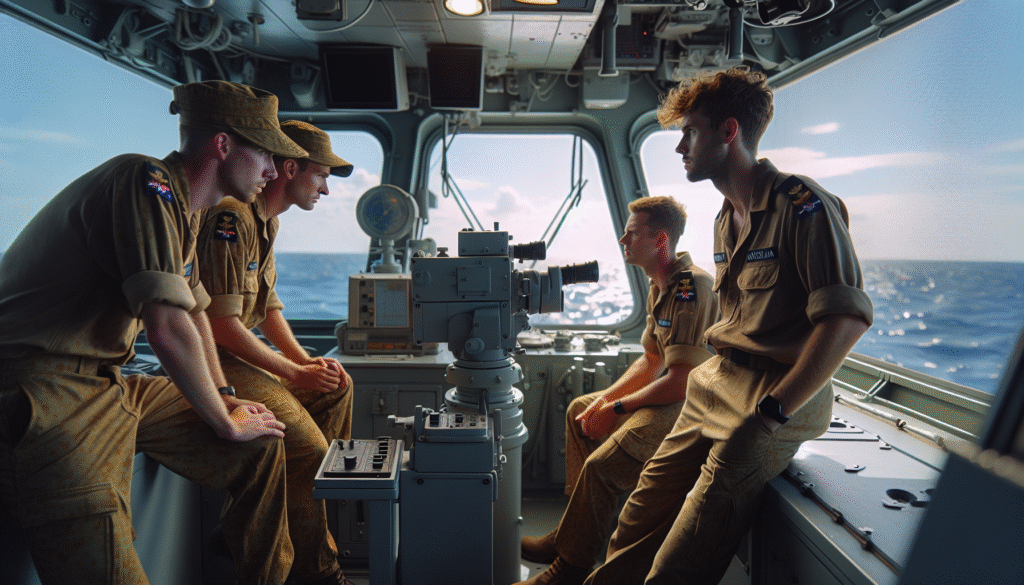
Australia has confirmed it is closely tracking the movements of a Chinese naval task group currently operating in the Philippine Sea, amid mounting regional concern over China’s expanding maritime footprint. The task group, comprised of the Type 075 amphibious assault ship Guangxi, destroyers, frigates, a replenishment ship, and a hospital ship, was first publicly identified in a report titled “Australia Monitors Chinese Task Group Operating in Philippine Sea,” published by USNI News.
This development underscores the growing strategic attention being paid to the Indo-Pacific’s increasingly congested and contested waterways. According to Australia’s Department of Defence, Royal Australian Navy assets have been deployed to monitor the Chinese flotilla, which was last seen sailing through international waters but in areas of heightened sensitivity due to overlapping territorial claims and existing security agreements.
“The Australian Defence Force is aware of the presence of the Chinese task group and continues to monitor its movements,” an Australian official said in a statement cited by USNI News. The official emphasized that all countries have the right to freedom of navigation in international waters, but Australia remains vigilant about any developments that may affect regional stability.
The Philippine Sea, a strategically vital area east of Taiwan and the Philippines, increasingly serves as a flashpoint in the geopolitical competition between the United States and China. While Beijing maintains that its naval deployments are conducted in accordance with international law, critics argue they often coincide with efforts to assert maritime claims and project power well beyond its shores.
The presence of the Guangxi, one of China’s largest amphibious platforms, is of particular interest to military observers. Designed to carry troops, vehicles, and aircraft, the ship bolsters Beijing’s capacity for rapid force deployment and amphibious operations. Its deployment alongside a full escort group further signals China’s commitment to broadening the scope and complexity of its naval operations.
The incident also reflects a pattern of increasing Chinese military activity in the broader Indo-Pacific. Just weeks ago, several ships from the People’s Liberation Army Navy (PLAN) were observed conducting joint training exercises near Japan, raising alarms among regional stakeholders.
Australia’s response aligns with its defense posture of active maritime surveillance and engagement with regional partners. The nation has increasingly aligned itself with the United States and other Indo-Pacific democracies through initiatives such as AUKUS and the Quadrilateral Security Dialogue, both of which emphasize maritime security collaboration.
The Chinese Ministry of National Defense has not publicly commented on the task group’s mission, though analysts suggest its presence may serve both operational and symbolic purposes. Beyond displaying naval capabilities, such deployments often function as strategic messaging tools to reassure domestic audiences and challenge adversaries.
As the Chinese task group continues its voyage through the Philippine Sea, regional powers will be watching closely. With an increasingly assertive Beijing testing the boundaries of naval diplomacy and competition, the Indo-Pacific remains a focal point of global power dynamics.