Air Force Tests Agile Ops in Indo-Pacific ReforPAC Drill
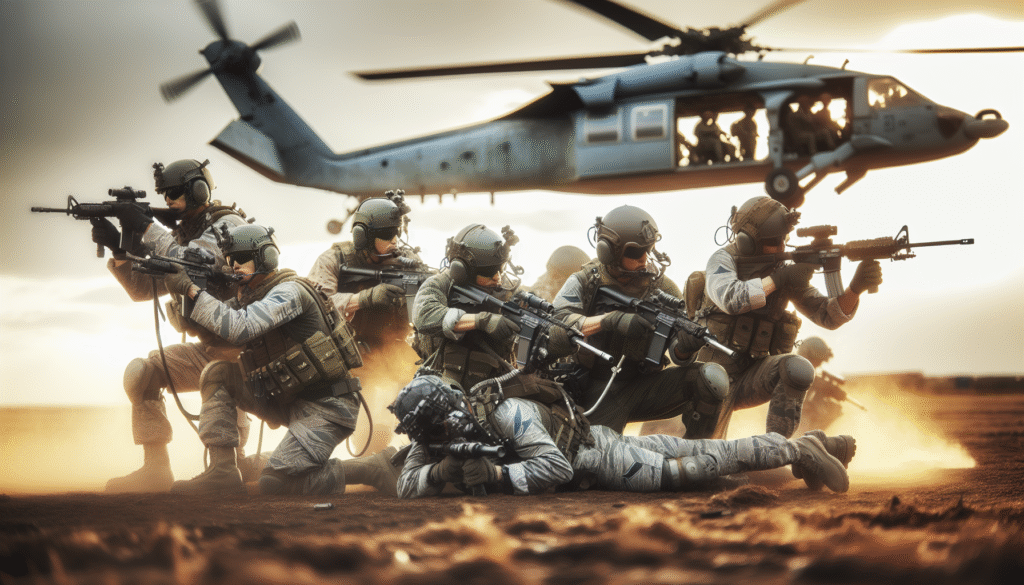
As the U.S. military refocuses its strategic posture toward potential conflict in the Indo-Pacific, the Air Force is expanding efforts to adapt to the region’s unique logistical and operational demands. In a recent article titled “Air Force’s ReforPAC exercise tests logistics, future command-and-control tech” published by DefenseScoop, the service’s Pacific-based command detailed a significant training event aimed at strengthening its capabilities for operating across vast distances in contested environments.
The ReforPAC (Reinforcing Pacific) exercise, held earlier this month, centered on validating next-generation command-and-control technologies and exploring novel logistics frameworks vital to maintaining operational tempo across the expansive Pacific theater. Carried out by Pacific Air Forces (PACAF), the competency-focused exercise spanned several forward-operating bases from the U.S. West Coast to isolated runways across partner nations in the Indo-Pacific.
According to DefenseScoop, commanders used ReforPAC to stress-test communications resilience, sensor integration, and agile logistics concepts that are increasingly seen as critical under the Air Force’s Agile Combat Employment (ACE) doctrine. ACE emphasizes the dispersal of aircraft and personnel across multiple austere or semi-prepared airfields, a strategy designed to complicate adversary targeting and enhance survivability in a high-end fight—particularly one involving a peer competitor like China.
What distinguishes ReforPAC from prior exercises, the article notes, is the synthesis of future-focused C2 (command and control) technologies with real-world logistical drills. These included the use of mobile operating bases, contested resupply simulations, and rapid communications relays under degraded conditions. The Air Force’s investment in digital tools—such as intelligent routing platforms, real-time asset tracking, and disaggregated sensor networks—was a major emphasis, revealing how serious the service is about moving beyond Cold War-era coordination models.
Colonel Jared Hutchinson, 15th Wing commander at Joint Base Pearl Harbor-Hickam and a key architect of the exercise, told reporters the aim was not just to demonstrate new tech, but to understand how agile teams could adapt under pressure when dealing with fractured logistics chains and uncertain networks. “We’re testing our limits in how we command, control, and sustain airpower at the edge,” Hutchinson said in remarks shared by DefenseScoop.
The exercise comes amid wider Pentagon efforts to modernize joint command-and-control infrastructure under the banner of the Joint All-Domain Command and Control (JADC2) initiative. ReforPAC functioned as both a proving ground and a learning opportunity within that framework, helping commanders identify shortfalls and refine capabilities before they are applied in real-world operations.
While exact performance metrics from the exercise were not disclosed, PACAF officials indicated that data collected from ReforPAC would inform acquisition decisions, investment priorities, and doctrine adjustments. The Defense Department continues to see militarized logistics and flexible command networks as essential factors in deterring aggression and ensuring effective force projection in the Indo-Pacific.
ReforPAC represents the latest in a succession of large-scale military experiments designed to adapt the Air Force to an era where fixed bases and unchallenged air superiority can no longer be assumed. As geopolitical competition intensifies in the Pacific, exercises like this are expected to become more frequent—and more complex—as the Air Force prepares for a future where agility, resilience, and communication supremacy will be decisive.