US Carrier Arrives in Caribbean Amid Venezuela Tensions
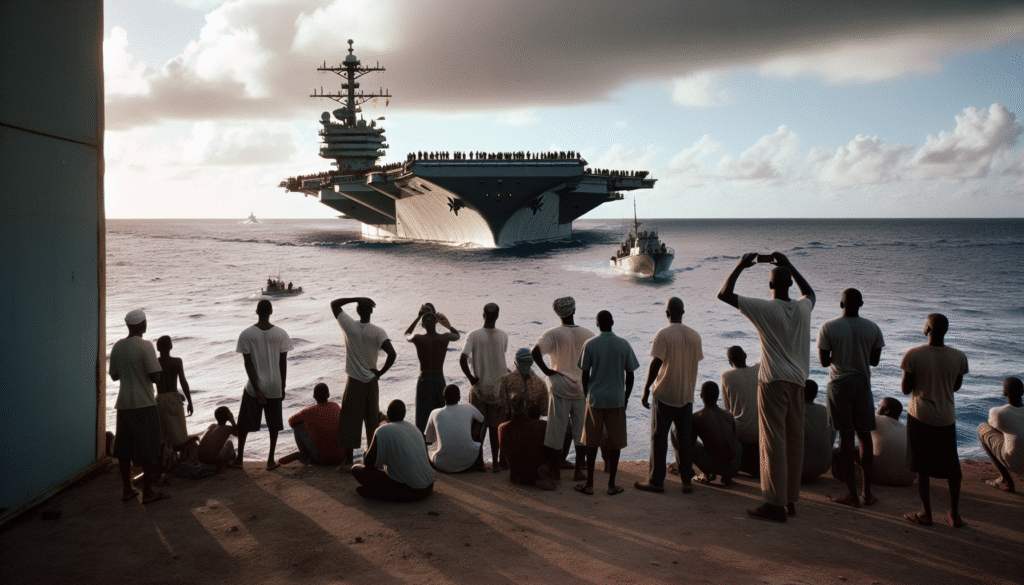
In a significant display of military presence, a U.S. Navy aircraft carrier has arrived in the Caribbean Sea amid an escalating geopolitical standoff involving Venezuela, underscoring growing American concern over regional instability. The development was first reported by Military Times in the article titled “US aircraft carrier arrives in the Caribbean in buildup near Venezuela,” published on November 16, 2025.
According to defense officials cited in the report, the deployment of the carrier strike group is intended to project deterrence and ensure maritime security in the region as tensions rise over Venezuela’s recent territorial assertions—particularly in its long-standing border dispute with Guyana. The United States has become increasingly alarmed by what it views as aggressive posturing by the government of Nicolás Maduro, including military movements near the contested Essequibo region, an area rich in natural resources and claimed by both countries.
The arrival of the carrier—whose name and accompanying fleet details have not yet been officially confirmed—follows joint military exercises conducted by Venezuelan forces near the Guyana border earlier this month. Those maneuvers have fueled worries in Washington and among Caribbean nations that a miscalculation could spark a broader conflict in the hemisphere.
Pentagon officials have emphasized the deployment’s defensive nature, stating that the operation aims to reassure regional partners, secure international shipping lanes, and promote stability through a visible and capable U.S. presence. Navy leadership has maintained that the mission conforms to international law and U.S. commitments under various multilateral defense frameworks.
The Venezuelan government has condemned the move as a provocation, accusing the United States of meddling in sovereign affairs and seeking to undermine its territorial claims. In a televised address, President Maduro described the U.S. deployment as a “threat to peace” and called upon allied nations to denounce what he termed “imperialist aggression.” Caracas has also sought support from Russia and China in diplomatic channels, adding a potentially wider geopolitical dimension to the dispute.
Meanwhile, the government of Guyana has welcomed the increased U.S. presence, citing the need for international support to safeguard its territorial integrity. Guyanese officials have repeatedly asked for global assistance in deterring what they view as coercive attempts by Venezuela to redraw borders unilaterally.
Analysts caution that while actual conflict remains unlikely in the near term, the convergence of military exercises, maritime deployments, and inflammatory rhetoric has raised the stakes considerably. The Biden administration is reportedly weighing a range of diplomatic and military options to de-escalate the situation, including increased engagement with the Organization of American States and the United Nations.
The U.S. aircraft carrier’s appearance in the Caribbean marks one of the most visible signs yet of Washington’s evolving posture toward the Maduro regime and highlights the growing complexity of security dynamics in Latin America. As regional and global powers align themselves along familiar ideological lines, the episode threatens to become a renewed flashpoint in hemispheric relations.