South Korea Tests Fleet Missile Defenses in Wargames
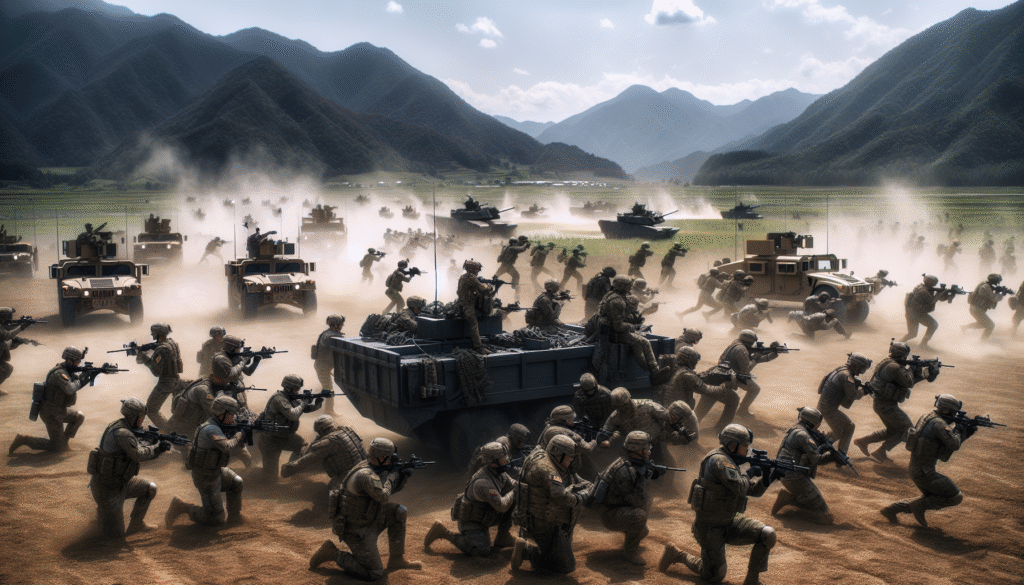
South Korea’s Navy has conducted its first-ever fleet-wide war games with a new destroyer formation, testing its missile defense capabilities amid growing regional threats. As reported in the article “New South Korean Destroyer Formation Practices Missile Defense in First-Ever Fleet Wargames” published by USNI News, the Republic of Korea Navy (ROKN) carried out the large-scale exercises this month, deploying multiple Aegis-equipped warships to simulate responses to inbound ballistic and cruise missile threats.
The drills mark a significant evolution in South Korea’s maritime defense posture, showcasing the operational readiness of its newest Sejong the Great-class destroyers. These advanced vessels are outfitted with cutting-edge radar and weapon systems capable of intercepting enemy missiles and tracking multiple aerial targets simultaneously. According to the USNI News report, the exercise included live-action scenarios and integrated command and control frameworks, suggesting an intensified focus on multi-domain coordination in real-world contingencies.
Participating units conducted simulated detection and intercept missions against mock missile threats, coordinated across task groups to improve interoperability, and executed joint fire drills. Military officials highlighted that the wargames were intended to test real-time responsiveness and to validate the Navy’s growing role in national and regional missile defense systems.
The Sejong the Great-class destroyers—among the heaviest and most heavily armed in the world—serve as the cornerstone of South Korea’s maritime strike capability. Equipped with the U.S.-developed Aegis Combat System and a vertical launch system capable of firing Standard Missiles (SM-2 and SM-3), the ships enable South Korea to counter a variety of airborne threats, including tactical ballistic missiles, which are of particular concern given North Korea’s evolving missile arsenal.
The move comes as Seoul continues to deepen its strategic alignment with the United States and other regional allies. Joint naval training exercises, increased surveillance operations, and intelligence sharing have all been part of a growing effort to counter perceived provocations from Pyongyang and maintain a stable security architecture in the Indo-Pacific.
Naval analysts stress that these developments indicate a shift toward proactive deterrence, with South Korea pursuing not just defense-in-depth, but also strategic parity in naval capabilities. The recent war games reflect greater emphasis on integrated maritime and missile operations, aligning with broader defense modernization plans announced by the South Korean Ministry of National Defense.
With regional tensions exacerbated by North Korea’s latest missile tests and broader geopolitical competition, South Korea’s demonstration of advanced naval capabilities is likely to be closely watched by both allies and adversaries. The success of these drills will inform future force structure decisions and may accelerate procurement programs meant to enhance national missile defense.
As highlighted in the USNI News report, the Pacific theater is experiencing a notable transformation in military dynamics, and exercises such as these underscore South Korea’s intent to play a more assertive role in regional security affairs.