USS Gerald R Ford Leads US Naval Outreach in Latin America
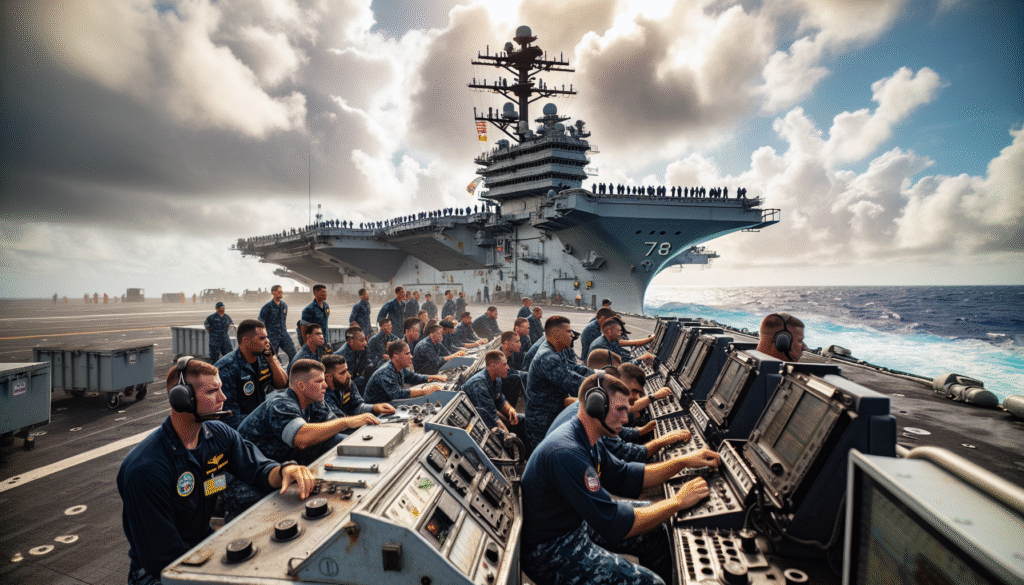
The U.S. Navy’s most advanced aircraft carrier, the USS Gerald R. Ford, has arrived in Latin American waters as part of an extended deployment aimed at strengthening military ties with regional allies and reaffirming the United States’ commitment to maritime security in the Western Hemisphere. The development was originally reported in a November 11 article titled “USS Gerald R. Ford arrives in Latin American waters” published by Military Times.
The arrival marks a significant phase in the Ford Carrier Strike Group’s 2025 global operations. According to Navy officials, the stop provides both reassurance to partner nations and an opportunity to promote security cooperation through joint exercises and port visits. While the ship’s specific itinerary remains classified for security reasons, defense sources indicate its activities will include bilateral engagements with several South American naval forces and participation in multinational training exercises.
The Gerald R. Ford, commissioned in 2017, is the lead ship of its class and represents the Navy’s most formidable carrier platform to date. With cutting-edge technologies including an electromagnetic aircraft launch system and an advanced arresting gear system, the Ford exemplifies the Navy’s push toward operational efficiency and increased aircraft launch capacity. The carrier is also designed to reduce the number of sailors needed on board, contributing to long-term cost savings over its lifespan despite its significant procurement cost.
Navy officials emphasized that the Ford’s deployment to the region is not a direct response to any specific threat, but rather part of a broader U.S. strategy to maintain a forward presence and build interoperability within key maritime corridors. Rear Adm. Erik Eslich, commander of Carrier Strike Group 12, expressed confidence in the mission’s value, noting that the group’s operations “underpin stability and contribute to the security architecture” of the region.
The deployment comes at a time when geopolitical competition is intensifying in various parts of the globe, including Latin America, where rivals such as China and Russia have sought to increase their influence through military diplomacy and infrastructure investments. U.S. defense planners view sustained naval engagement with partners in the Caribbean and South America as essential to counterbalance that trend and reaffirm Washington’s role in hemispheric defense.
The Gerald R. Ford’s presence is expected to be closely watched by both allies and competitors. Port visits by U.S. aircraft carriers typically draw diplomatic and public interest, and Navy leaders often use such high-profile engagements to build trust and emphasize shared security interests.
As the Gerald R. Ford continues its deployment, its operations are likely to set the tone for future U.S. military engagements in the region, as Washington reasserts its influence in Latin America through a blend of deterrence, partnership-building, and visible presence.