Army Certifies Rapid Anti-Drone Response Force
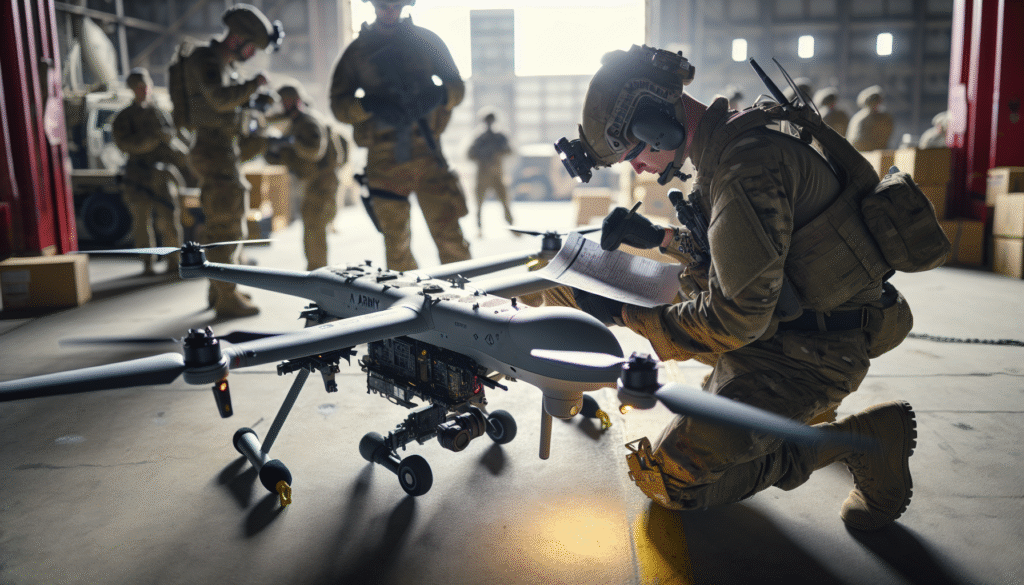
The U.S. Army has officially certified a new rapid-response anti-drone team designed to counter the growing threat posed by unmanned aerial systems (UAS), according to a recent report titled “Army certifies rapid anti-drone response team” published by Defense News. The specialized unit, formed under the purview of the Joint Counter-small Unmanned Aircraft Systems Office (JCO), reflects a significant evolution in how the military addresses the increasingly complex challenges presented by drone warfare.
The team, formally known as the Mobile Low, Slow, Small Unmanned Aircraft System Integrated Defeat System (M-LIDS) response force, has undergone a rigorous certification process following a series of exercises evaluating its operational readiness. The certification marks a critical milestone in the Army’s broader effort to develop layered and adaptive defense mechanisms against small UAS threats that have proliferated in recent years across global conflict zones.
Tasked with rapidly deploying to areas under drone threat, the M-LIDS team integrates a range of sensors, jamming technologies, and kinetic interceptors to detect, track, and neutralize hostile drones. The technology package aligns with the military’s strategy of fielding scalable, interoperable solutions to counter drones operating in both military and civilian airspace.
Officials cited in the Defense News article emphasized the speed at which the Army moved from concept to certification, reflecting the urgency surrounding drone defense capabilities. The initiative responds partly to the tactical lessons learned from Ukraine, Iraq, Syria, and other theaters, where non-state actors and conventional forces have employed commercial drones in innovative and often devastating ways.
Brigadier General Frank Lozano, Program Executive Officer for Missiles and Space, called the M-LIDS capability “a critical solution to the evolving UAS landscape,” noting that the integrated system provides warfighters with a mobile, deployable tool set adaptable to a range of mission environments. The system has already been field-tested and has shown success in neutralizing various UAS threats during live-fire scenarios, suggesting its battlefield efficacy.
Beyond the initial deployment, future iterations of the M-LIDS platform are expected to incorporate artificial intelligence and machine-learning algorithms to refine threat detection and improve decision-making speed. Analysts observing the deployment underscore its role as a transitional bridge while the Pentagon continues to refine long-term counter-UAS doctrine and acquisition priorities.
The certification of the rapid response team arrives at a time when both the Department of Defense and lawmakers are increasingly prioritizing investment in counter-drone technologies. The fiscal year 2025 budget proposal includes expanded funding for research, development, and procurement of C-UAS systems across all services.
As the threat from commercial and military-grade drones continues to evolve, the Army’s new M-LIDS unit underscores a commitment to outpacing adversaries through agility and technological innovation. Whether it can serve as a model for joint-service adoption or stand as a unique Army solution remains to be seen, but it is clear that counter-drone capabilities will remain central to the military’s future operational readiness.