2nd MAW Marks Legacy as Marine Corps Turns 250
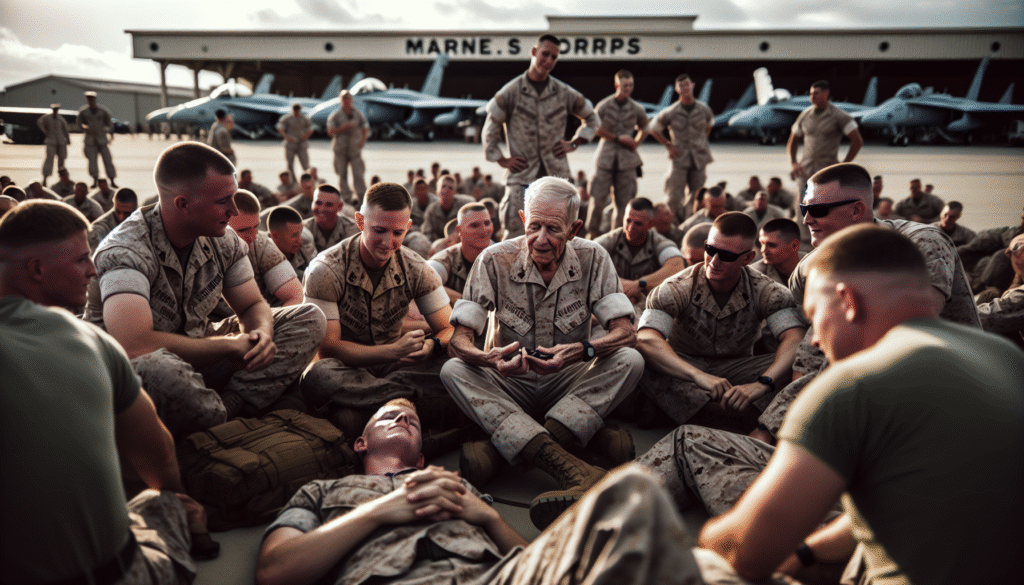
As the United States Marine Corps approaches its 250th anniversary, a recent article published by Breaking Defense, titled “The Marine Corps’ 250-Year Legacy, Through The Lens Of 2nd Marine Air Wing,” takes a closer look at one of the service’s critical aviation components that has evolved alongside the Corps itself. The piece, examining the past and future of the 2nd Marine Aircraft Wing (2nd MAW), highlights how this aviation unit continues to serve as a cornerstone of Marine Corps expeditionary power, particularly in a rapidly shifting global security environment.
Established in 1941 on the eve of America’s entry into World War II, the 2nd MAW has played a consistent and pivotal role in Marine Corps operations—from the island-hopping campaigns of the Pacific theater to counterinsurgency missions in Iraq and Afghanistan. As Breaking Defense notes, the unit’s legacy is not just a history of battle-tested performance but also a lens through which the Corps is reassessing its operational relevance in an era defined by peer competition, emerging technologies, and new geostrategic demands.
The Corps’ Force Design 2030 initiative looms large over current efforts to reconfigure the aviation wing’s capabilities. Under this reform effort, the Marine Corps is aggressively pursuing ways to decentralize its forces, enhance mobility, and integrate multi-domain capabilities—especially important in the Indo-Pacific region, where vast distances and highly contested environments place a premium on autonomous logistics, precision fires, and distributed command structures.
Marines interviewed in the article emphasized the enduring importance of readiness and adaptability. Leaders within 2nd MAW are not only maintaining legacy equipment such as the F/A-18 Hornet, AH-1Z Viper, and CH-53E Super Stallion, but are also incorporating advanced platforms like the F-35B Lightning II and MQ-9A Reaper drone into their operations. This modernization aims to preserve the wing’s traditional roles—close air support, aerial reconnaissance, and logistical sustainment—while enabling it to meet the demands of future conflicts that may involve anti-access/area-denial (A2/AD) threats and electronic warfare.
Breaking Defense’s coverage underscores how this transformation is not merely technological but cultural. Commanders are instilling a mindset of experimentation throughout the wing, encouraging Marines to innovate in how they deploy, communicate, and fight. Training scenarios are now emphasizing dispersed operations across archipelagic terrain, with logistics hubs and airfields that can be rapidly moved or hidden—tactics designed to complicate adversarial targeting in high-threat environments.
There are growing challenges, however. Maintaining readiness while integrating new capabilities requires investment, both in terms of resources and human capital. As the article points out, managing the dual burdens of legacy system upkeep and the rollout of new platforms has placed pressure on maintenance crews and commanding officers alike. Moreover, the recruitment and retention of skilled personnel capable of operating increasingly complex systems remain ongoing concerns for Marine aviation leadership.
Nevertheless, as the Marine Corps commemorates 250 years of service, the 2nd Marine Aircraft Wing exemplifies the institution’s adaptability and resilience. By continuously evolving to meet the demands of modern warfare, the Wing stands as a reminder that air power is integral not just to achieving tactical success, but to sustaining the Marine Corps’ broader strategic mission.
In reflecting on this legacy, Breaking Defense’s article situates the 2nd MAW not only as a historical artifact, but as a proving ground for the future—a unit where the Corps’ hybrid of tradition and transformation continues to take flight.