USS Ford Enters SOUTHCOM in Strategic Navy Shift
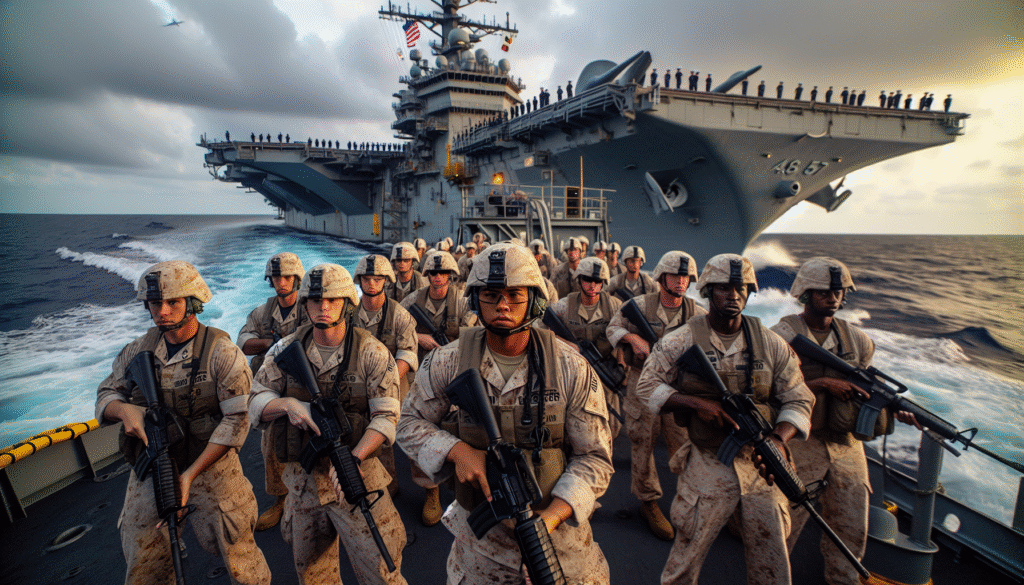
The U.S. Navy’s most advanced aircraft carrier, USS Gerald R. Ford (CVN-78), has entered the U.S. Southern Command area of responsibility for the first time, signaling a notable shift in U.S. maritime posture in the Western Hemisphere. The move was first reported in the article “Carrier USS Gerald R. Ford Now in U.S. Southern Command,” published by USNI News on November 11, 2025.
According to the report, the nuclear-powered supercarrier arrived in the region earlier this month following the completion of its Mediterranean deployment, marking an extension of its presence amid evolving global mission demands. The carrier’s transition into U.S. Southern Command (SOUTHCOM), which is responsible for operations in Central and South America and the Caribbean, represents a significant engagement in waters typically underserved by high-end assets like a Nimitz- or Ford-class flattop.
U.S. Southern Command confirmed Ford’s presence via a statement that highlighted routine operations in support of regional partnerships, maritime security, and counter-narcotics missions. Officials emphasized the visit as an opportunity to strengthen defense relationships with allied nations and showcase the Navy’s commitment to cooperative security in the hemisphere.
Rear Adm. Douglas Sasse, commander of Carrier Strike Group 12, which accompanies Ford, underscored the ship’s role in fostering diplomatic engagement while maintaining readiness. “Operating in the SOUTHCOM AOR allows us to work closely with partner nations and build interoperability,” Sasse said, according to USNI News. The Ford is expected to participate in a series of bilateral and multilateral maritime exercises during its time in the region.
The presence of a first-in-class aircraft carrier like the Gerald R. Ford in this theater is rare, as such vessels are traditionally deployed to the Indo-Pacific or European theaters where tensions are more acute. However, SOUTHCOM Commander Army Gen. Laura Richardson has repeatedly pointed to the strategic importance of the region and the need for greater U.S. visibility and presence.
The Ford’s deployment may also serve as a response to the increasing influence of external powers in Latin America, particularly China and Russia, which have deepened economic and security ties with several nations in the region. By projecting state-of-the-art naval capabilities, the U.S. aims to reinforce its role as the dominant maritime power in the Western Hemisphere.
Commissioned in 2017, USS Gerald R. Ford is the lead ship of a new generation of carriers featuring electromagnetic aircraft launch systems and advanced arresting gear. After years of trials and technical delays, it reached initial operational capability in late 2022 and has since begun taking on full global deployments.
While the exact duration of the carrier’s stay in SOUTHCOM has not been announced, Navy officials indicated that the deployment supports longer-term goals to increase naval cooperation in the hemisphere. The Ford’s arrival may presage a broader strategy to rotate more technologically advanced platforms through the region as part of U.S. global force posturing.
For now, its operations in the waters of the Caribbean and along Central and South American coastlines signal a reassertion of naval presence in a region facing rising transnational threats and geopolitical competition.