Transforming Army Logistics for Future Combat Success
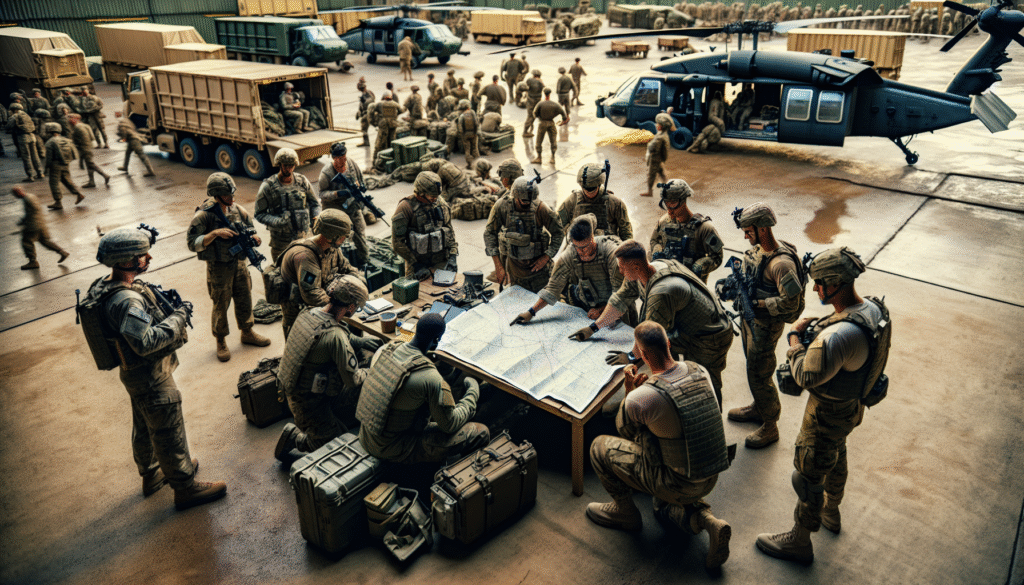
As the U.S. Army continues to adapt to new global challenges, one of its most critical transformations is happening far from the battlefield — in the logistical systems that sustain it. In the recent Military Times video report titled “You can’t fight without supplies: A look at a changing Materiel Command,” senior Army leaders emphasized the strategic importance of reshaping how the Army delivers and maintains its resources to stay competitive against peer adversaries.
At the center of this shift is Army Materiel Command (AMC), the sprawling logistical apparatus responsible for ensuring soldiers have what they need, when they need it — from ammunition and vehicles to maintenance and transportation assets. General Charles Hamilton, AMC’s commanding general, underscored that sustaining the fight is no longer just about stockpiling resources but about orchestrating rapid, flexible responses to unpredictable threats in contested environments.
“As we look to 2030 and beyond, our adversaries are not waiting,” Hamilton said in the report. “They’re evolving how they fight, which means we must evolve how we support the fight.”
Much of the current transformation is aimed at reducing the Army’s reliance on static supply lines, which are vulnerable in high-intensity conflicts. Instead, the Army is exploring modular logistics hubs, predictive maintenance using artificial intelligence, and forward-positioned materiel to reduce resupply times. These initiatives are part of a broader push to enable operations in what military planners call multi-domain operations — warfare that unfolds across land, air, sea, cyber, and space — against technologically advanced rivals.
“This is not theoretical,” said Hamilton. “In every exercise we run and every challenge we simulate, the success or failure often turns on logistics. You can’t shoot what you don’t have.”
Part of the challenge involves rethinking the Army’s industrial partnerships. AMC is working more closely with the private sector to enhance supply chain resiliency and ramp up production capacity in times of crisis. The goal is to build a logistics network that can surge on demand — a vital capability should conflict erupt in the Indo-Pacific or elsewhere.
In the Military Times feature, the scope of AMC’s role — and the implications of its transformation — were presented with stark clarity. With geopolitical tensions rising and the U.S. military preparing for a possible return to large-scale combat operations, logistics is emerging as a frontline issue rather than a back-office function.
Moreover, AMC is undertaking internal restructuring to better align with forward-deployed combatant commands. As noted in the report, deployments such as Army Prepositioned Stocks in Europe and the Pacific are being reevaluated to ensure that key platforms and sustainment tools are not only available but positioned where they will be most needed.
As the Army continues to modernize its warfighting capabilities, leaders recognize that asymmetry in logistics could mean the difference between swift victory and prolonged struggle. With AMC at the heart of this mission, the transformation now underway could redefine how the Army sustains combat power in the 21st century.
The message from the top is unambiguous: speed, precision, and adaptability in logistics are no longer luxuries. They are prerequisites for operational success in future conflicts.