Fujian Commissioning Marks Milestone in China’s Naval Expansion and Strategic Ambitions
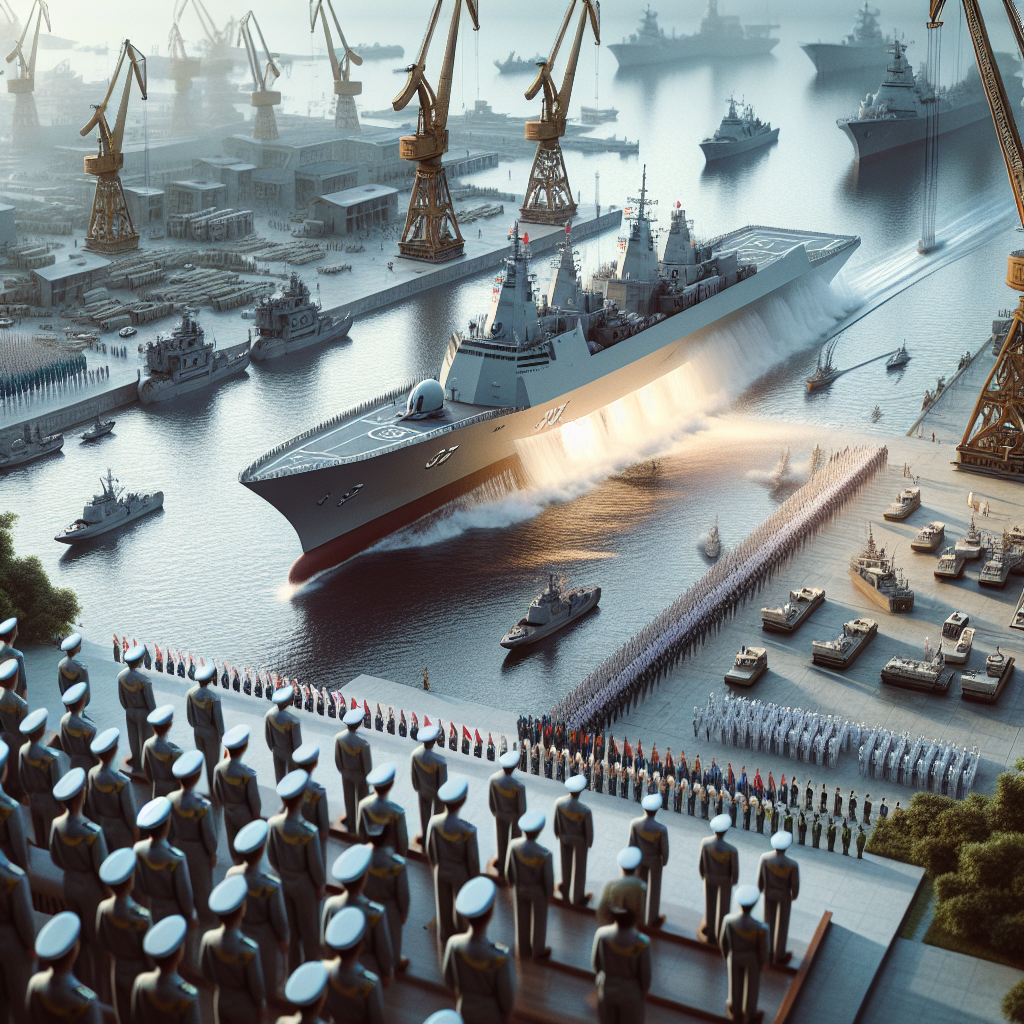
Beijing has officially commissioned its third aircraft carrier, the Fujian, signaling a pivotal advancement in China’s naval capabilities amid growing strategic competition in the Indo-Pacific region. According to the Defense News article titled “Beijing commissions third aircraft carrier, first one made in China,” the vessel represents the country’s most significant step yet toward closing the technological gap with Western naval powers.
Launched in 2022 and now entering full military service, the Fujian marks China’s first domestically designed and constructed aircraft carrier equipped with cutting-edge electromagnetic catapult systems, a key technological leap forward. This innovation allows for quicker, more efficient launching of aircraft, similar to systems used on the U.S. Navy’s Gerald R. Ford-class carriers. Analysts say the carrier’s integration is a strategic milestone for the People’s Liberation Army Navy (PLAN), reflecting China’s ambitions to develop a blue-water navy capable of projecting power far beyond its shores.
Named after a coastal province across from Taiwan, the Fujian underscores Beijing’s focus on maritime readiness in contested regions. China’s decision to field the advanced Type 003-class vessel comes amid increasingly assertive naval operations around Taiwan, the South China Sea, and broader Indo-Pacific waters. With a displacement of approximately 80,000 tons and designed to host an air wing of fighter jets and support aircraft, the Fujian significantly enhances the PLAN’s operational reach and flexibility.
Experts say the commissioning signals not just China’s growing shipbuilding capabilities, but also a systematic approach to modernizing its military architecture. Unlike the PLAN’s first two carriers—the Liaoning, a retrofitted Soviet vessel, and the Shandong, based on the same design—the Fujian is larger, more technologically complex, and entirely a product of China’s defense industrial base. The ship’s successful development is emblematic of President Xi Jinping’s broader push to transform the People’s Liberation Army into a “world-class” military by mid-century.
While full operational capability may still be months away as the carrier undergoes further trials and aircraft integration, the announcement has already sparked responses from regional powers. Defense analysts note that nations such as Japan, Australia, and India are closely watching China’s expanding naval posture. The United States, which maintains the world’s largest fleet of nuclear-powered aircraft carriers, views the growing capability gap as a critical variable in maintaining deterrence across Asia’s security flashpoints.
As Beijing continues its naval modernization drive, the commissioning of the Fujian serves both as a demonstration of strategic intent and a reflection of the evolving balance of power in maritime Asia. The vessel’s entry into service marks a notable shift in Chinese naval doctrine—from coastal defense to far-seas operations—suggesting that China’s maritime ambitions are entering a new, more assertive phase.