Germany Develops Miniature Anti-Drone Missile to Strengthen Short-Range Air Defense
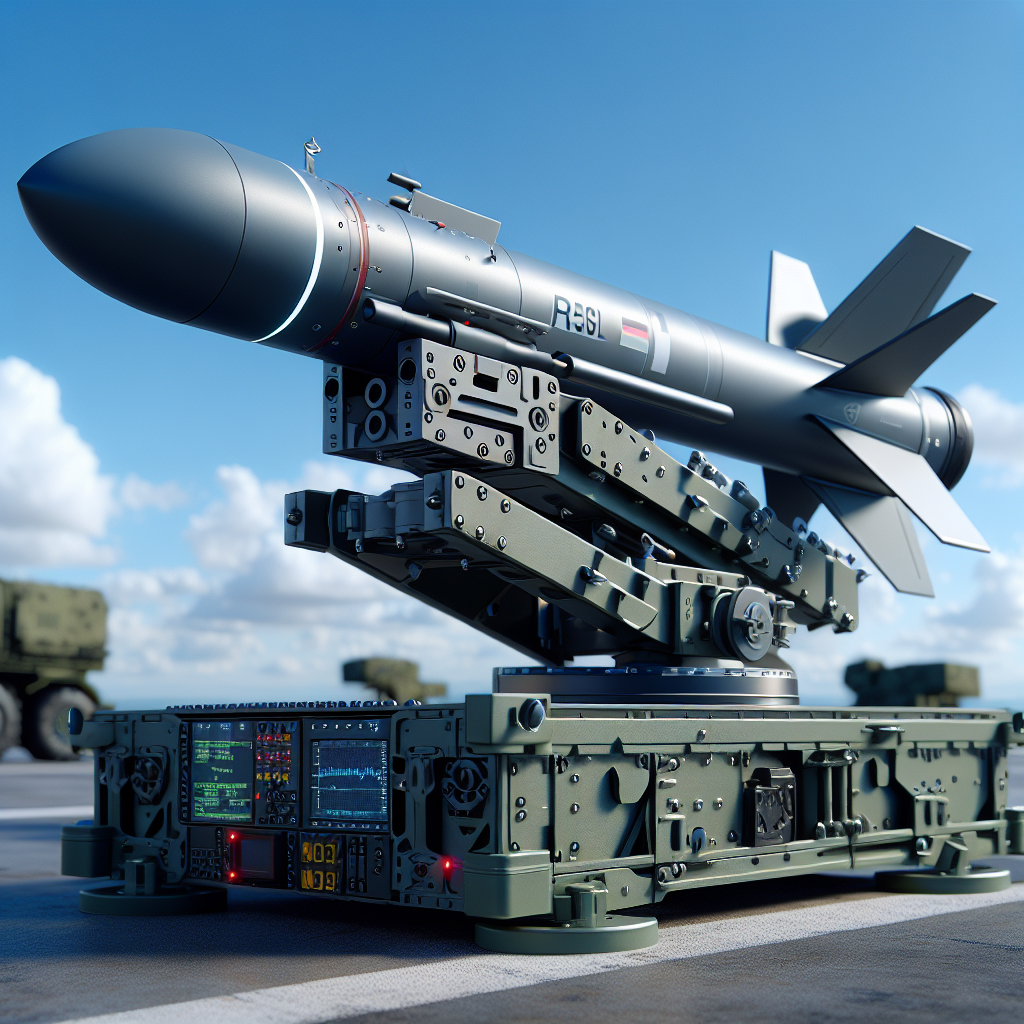
Germany is advancing plans to deploy a new miniature surface-to-air missile designed specifically to counter the growing threat from small unmanned aerial systems (UAS), according to a report published by Defense News on November 6 titled “Germany moves to field a miniature anti-drone missile.” The development is part of a broader effort by Berlin to modernize its short-range air defense capabilities as drone attacks increasingly shape the modern battlefield.
The missile, known as the Enforcer Air, is being developed by MBDA, a European missile manufacturer with strong ties to Germany’s defense industrial base. Building on its earlier Enforcer systems, the new weapon is meant to provide a lightweight, mobile response to the proliferation of compact unmanned threats that are often difficult for conventional air defense systems to detect and engage. With a range of up to 2 kilometers and a laser-guided targeting system, the missile is geared toward providing highly targeted, low-collateral-damage responses in complex environments.
According to Defense News, the German defense procurement agency, BAAINBw, is backing the project, which will include rapid prototyping in 2024 and potential fielding as early as 2025. Although final procurement decisions are still pending, the German Ministry of Defense has signaled urgency in countering the expanding use of improvisational drone tactics in conflict zones, notably illustrated by Russia’s invasion of Ukraine.
The emergence of small and relatively inexpensive drones as tools for reconnaissance, targeted strikes, and disruption has significantly altered battlefield dynamics. Military analysts note that these systems can penetrate traditional defense lines and offer asymmetric advantages to less technologically advanced adversaries. In response, NATO members, including Germany, are prioritizing the development of agile counter-UAS tools that can be deployed across varied terrain and urban environments.
Defense News notes that MBDA’s Enforcer Air is engineered to be used from portable launchers or mounted platforms, allowing for flexibility in both mobile operations and stationary defense scenarios. Its small warhead and precision guidance aim to reduce the risk of unintended damage, making it particularly attractive for operations in densely populated areas or near sensitive infrastructure.
Germany’s push into miniature missile development reflects a broader shift by European militaries to invest in next-generation air defense systems tailored to thwart evolving aerial threats. Several other NATO allies are exploring similar technologies, amid growing consensus that traditional missile systems may not be cost-effective or responsive enough to counter swarms of small drones.
The announcement also comes as Germany seeks to revitalize its defense posture following years of underspending. Chancellor Olaf Scholz’s government has committed significant funding under a €100 billion special defense fund launched in the wake of the war in Ukraine, with a notable emphasis on modernization and innovation.
Should the Enforcer Air prove successful in testing and early deployment, it could become a key component of Germany’s layered air defense architecture. Moreover, its development may serve as a model for other allies seeking cost-efficient, field-deployable solutions to deter and neutralize the unmanned threats increasingly seen in modern conflicts.